


Signs of a Burst Pipe in Wall: 7 Warning Signs to Check

Table of Contents
7 Warning Signs of a Burst Pipe in Wall
Sounds Coming From Inside the Wall
Stains, Damp Spots, and Bubbling Paint
Pressure Drops and Rising Water Bills
How to Find a Water Leak in a Wall Without Tearing It Open
Step 1: Shut off every water-using fixture and appliance
Step 2: Run the water meter test
Step 3: Isolate likely fixtures
Step 4: Distinguish a plumbing leak from other moisture
Step 5: Use non-invasive detection tools
Step 6: Know when the wall has to come open
What to Do When a Pipe Bursts: First Steps and Safety
Electrical and Structural Safety Around Wet Walls
How to Shut Off Water to a House
Burst Pipe vs. Other Sources of Wall Moisture
Does Homeowners Insurance Cover Burst Pipes?
What is usually covered
What is usually not covered
Why slow leaks get denied
How to document a claim
Questions to ask your adjuster
Preventing Frozen and Corroded Pipes
When to Call a Plumber
Frequently Asked Questions
Last Updated: October 12, 2026
7 Warning Signs of a Burst Pipe in Wall
A burst pipe inside a wall rarely announces itself with a flood. Most homeowners in Thomaston first notice burst pipe signs: a faint sound, a warm spot on the floor, or a water bill that does not add up.
This guide covers seven common warning signs of a burst pipe, how to confirm a hidden leak without tearing open drywall, and what to do in the first minutes after a burst.
Key Takeaway The earliest signs of a burst pipe in wall are usually sound, smell, or a jump in your water bill, not visible water. Trust those small clues.
Sounds Coming From Inside the Wall
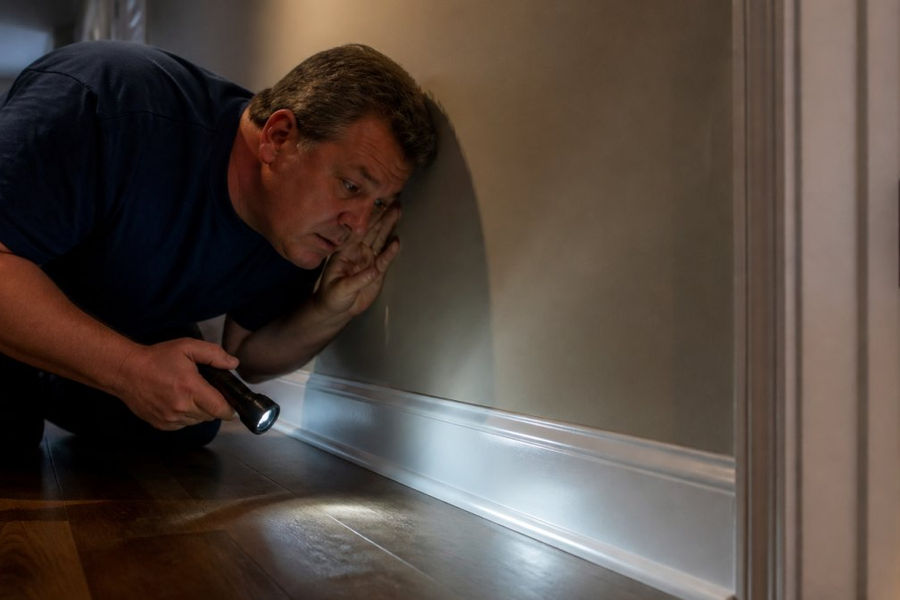
Water moving through a wall when no fixture is running is the clearest early clue. Listen for dripping, a steady hiss, or rushing water behind drywall, noises that get louder at night.
If the sound repeats in the same spot, treat it as a leak and note the location to help a plumber find it faster.
Stains, Damp Spots, and Bubbling Paint
Water stains, damp spots, and bubbling paint on walls or ceilings are visible proof that moisture is escaping a pipe. A brown or yellow ring on drywall means water has been soaking through for a while.
Watch for these specific signs:
Peeling paint that lifts away from the wall
Soft or spongy drywall that dents when pressed
A musty odor or visible mold and mildew near baseboards
If you see any of these, shut off the water and call a licensed plumber. Paint and drywall can hide a leak for weeks while damage spreads behind them.
Pressure Drops and Rising Water Bills
Reduced or fluctuating water pressure and an unexplained jump in your water bill are two of the most overlooked burst pipe signs. If shower pressure drops without a change in usage, water may be escaping somewhere in the system.
Check your water meter when no fixtures are running: if the dial still spins, you have a hidden leak.
Watch Out Ignoring a slow leak behind drywall can lead to mold growth, rotted framing, and electrical hazards. The repair cost grows fast the longer you wait.
How to Find a Water Leak in a Wall Without Tearing It Open
You can often confirm a hidden leak without cutting into drywall. The trick is to separate a real plumbing leak from condensation, an exterior water source, or a fixture that is quietly running.
Step 1: Shut off every water-using fixture and appliance
Turn off all faucets, showers, and hose bibs, then shut off appliances that fill or drain on their own: the washing machine, dishwasher, refrigerator ice maker, water heater, humidifier, and any irrigation zone. A dripping toilet flapper can move enough water to look like a leak, so check that each seats fully.
Step 2: Run the water meter test
Find your water meter, usually near the curb or in a basement utility area. Note the sweep hand or last digit, wait 15 to 30 minutes with nothing running, then read it again.
A meter that creeps slowly points to a slow leak, often at a toilet flapper, a supply line behind a cabinet, or a pinhole in a copper run.
Step 3: Isolate likely fixtures
If the meter moved, narrow the source before assuming the wall. Shut off the valve behind each toilet and under each sink one at a time, rechecking the meter after each. If the meter stops when a fixture is isolated, the leak is there, not in the wall.
Step 4: Distinguish a plumbing leak from other moisture
Not every wet wall is a burst pipe. Use these clues to separate causes:
Plumbing leak: meter moves with all fixtures off, pressure drops, moisture tracks along a pipe run, or a warm spot appears on a slab floor.
Condensation: appears on cold surfaces in humid weather, dries when ventilation improves, and the meter stays still.
HVAC condensate: wet area near the air handler or a clogged drain pan, often with a musty smell.
If the meter test is negative and the moisture follows rain or humidity, look outside the plumbing system first.
Step 5: Use non-invasive detection tools
A moisture meter reads water content behind the surface and maps the wet zone without cutting; pin-type meters suit drywall, pinless work on tile and finished surfaces.
A plumber can add acoustic listening gear, which picks up water escaping under pressure, plus tracer gas or pressure testing to pinpoint the break, usually meaning a single small access hole instead of a torn-out wall.
Step 6: Know when the wall has to come open
Non-invasive methods have limits. If the meter test is positive, the moisture meter shows a broad wet area, and the leak cannot be isolated to a fixture, a plumber will likely need to open the wall. Expect a small inspection cut first, not a full wall removal, repairing the pipe and drying the cavity costs far less than replacing soaked framing and drywall.
Pro Tip Write down the meter reading, the time, and the exact spot where each clue appears. A plumber can use those notes to cut straight to the leak instead of searching the whole house.
What to Do When a Pipe Bursts: First Steps and Safety
Shut off the water first, then cut power to any wet areas.
CBS19
Follow these steps in order:
Shut off the main water valve immediately.
Open a low faucet to drain remaining water from the lines.
Cut power to wet rooms at the breaker box.
Move furniture and valuables away from the water.
Call a licensed plumber and your insurance company.
Document the damage with photos before cleanup.
Do not stand in standing water near outlets or appliances. Water and electricity are a dangerous pair.
Electrical and Structural Safety Around Wet Walls
Wet walls create two serious risks: electrical shock and structural weakening. Water can travel along framing to outlets, switches, and wiring far from the leak.
Stay out of any room with standing water until the power is off at the breaker, and never touch outlets, switches, or appliances with wet hands.
Long-term moisture rots framing and softens drywall; a spongy or bowed wall needs professional inspection before you repair the leak.
Pro Tip Take photos of everything before you move or clean anything. Insurance claims move faster with clear, dated documentation of the damage.
How to Shut Off Water to a House
Find your main shutoff valve before an emergency, usually near the water meter, in a basement, or in a utility closet. Test it once a year so it does not seize up when you need it.
Here is how to shut off water to a house:
Locate the main shutoff valve near the water meter or where the supply line enters the home.
Turn the valve clockwise until it stops.
Open a low faucet to release pressure in the lines.
Check the water meter to confirm flow has stopped.
If your home has a gate valve, turn it clockwise firmly but do not force it. If you cannot find the main valve, look for a curb stop near the street.
Burst Pipe vs. Other Sources of Wall Moisture
Not every damp wall means a burst pipe. Condensation, roof leaks, and clogged HVAC drain lines cause similar moisture, and telling them apart saves an unnecessary repair.
Use this table to narrow down the cause:
Sign | Likely Cause | What to Check |
Dripping sound, no rain | Burst or leaking pipe | Water meter, pressure |
Damp spot near roofline | Roof or flashing leak | Attic, ceiling above |
Foggy windows, wet walls in winter | Condensation | Ventilation, humidity |
Musty smell near AC unit | Clogged drain line | HVAC drip pan |
Rust-tinged water | Pipe corrosion | Water color, fixtures |
If the moisture appears near plumbing lines, comes with a pressure drop, or shows up with a rising water bill, a burst pipe is the likely cause. When in doubt, call a plumber to confirm.
Does Homeowners Insurance Cover Burst Pipes?
Most standard homeowners policies treat a sudden, accidental burst pipe as a covered peril. The key distinction is between the pipe itself and the water damage: many policies cap or exclude repairing the failed pipe, especially after freezing or wear, while covering damage to walls, floors, ceilings, and belongings. Read your policy's dwelling and personal property sections before assuming either way.
What is usually covered
Water damage to drywall, insulation, flooring, and ceilings after a sudden burst
Damage to furniture, electronics, and stored items from the escaping water
Mold cleanup when it results from a covered event and is reported promptly
What is usually not covered
The pipe repair itself, in many policies, or a reduced amount for it
Long-term leaks or damage from neglect you knew about and did not address
Frozen-pipe damage in a home left unheated or vacant beyond the policy's vacancy limit
Why slow leaks get denied
Insurers look at whether damage was sudden or gradual. A pinhole leak that soaked a wall for weeks reads as maintenance neglect, not an accident. That is why the meter test and dated photos matter, they show when the problem started and that you acted quickly. A plumber's written report strengthens the claim.
How to document a claim
Shut off the water and stop the damage first.
Photograph and video every wet area, including the meter reading and the failed pipe if visible.
Keep receipts for emergency repairs, fans, dehumidifiers, and any hotel stay.
Save damaged items until the adjuster has seen them, unless they pose a health risk.
Report the loss promptly and ask the adjuster to confirm your deductible and coverage limits in writing.
Questions to ask your adjuster
Is the pipe repair covered, or only the water damage?
Does my policy have a separate mold sublimit?
Will a frozen-pipe exclusion apply if the heat was on?
Coverage varies widely by policy and state, so confirm the terms in your own documents. If a claim is denied, ask for the specific policy language cited and consider an appeal with your plumber's report attached.
Preventing Frozen and Corroded Pipes
Insulate pipes in cold spaces, keep a slow drip on freezing nights, and replace old corroded lines before they fail. Freezing is a leading cause of burst pipes, especially in unheated crawl spaces and exterior walls.
Prevention steps that work:
Wrap exposed pipes in foam insulation.
Seal gaps around pipes where they enter the home.
Maintain heat at 55°F or higher, even when away (Home Preparedness Tips for Prolonged Frigid Cold).
Pipe corrosion weakens metal from the inside out, and rust-tinged water warns that a pipe is close to failing. Replacing aging pipes on your schedule beats an emergency repair at midnight.
When to Call a Plumber
Call a plumber as soon as you confirm a hidden leak, smell gas, or see water near electrical wiring. A burst pipe behind a wall is not a DIY job.
Reach out right away if you notice:
Water still flowing after you shut off the main valve
A wet wall near outlets, breakers, or a gas line
Standing water you cannot drain
At True Value Plumbing, we handle everything from leak detection to full pipe replacement.
Book online today and get your leak fixed right the first time.
Frequently Asked Questions
What does a burst pipe in a wall sound like?
A burst pipe in wall typically produces dripping sounds, a steady hiss, or rushing water behind the drywall. Hissing often points to a pinhole or small split, while rushing water suggests a larger break. These unusual noises often continue after you shut off every fixture in the house, which is the key clue. If you hear them at night when the house is quiet, note the location and check that wall for damp spots or water stains before calling a plumber.
Can a pipe burst without you knowing?
Yes. A slow leak or a pinhole burst can drip inside the wall cavity for weeks before you notice. Early clues include musty odor, bubbling paint, a small ceiling stain, or a water bill that climbs without extra water usage. Because the pipe damage stays hidden, the moisture spreads through insulation and framing first. Checking your water meter with every fixture off is the fastest way to confirm unexplained water loss.
Does homeowners insurance cover a broken pipe in the wall?
Most standard homeowners policies cover sudden and accidental burst pipe damage, including the resulting water damage to drywall, flooring, and belongings. The pipe repair itself is often excluded or capped, and slow leaks from corrosion or neglect are usually denied. Document everything with photos before cleanup, keep receipts, and call your insurer early. Coverage depends on your specific policy, so confirm the details before assuming you are protected.
How do you find a hidden wall leak without opening the wall?
Start by shutting off every fixture and watching your water meter for movement. If the dial still spins, water is escaping somewhere. Then walk the house listening for dripping or hissing, and run your hand along suspect walls for cool or damp patches. A moisture meter or thermal camera can narrow the location to a few feet. A plumber can confirm with acoustic listening equipment before any drywall comes down.
A burst pipe behind a wall can turn a small drip into thousands of dollars in damage if you wait. True Value Plumbing offers residential and commercial plumbing services, from emergency leak repair to full repiping and water heater replacement. Our team delivers high-quality, long-lasting results with a transparent process and a 10% military and senior discount. Get started with True Value Plumbing and stop the leak before it spreads.
Book Online

Comments