


How to Avoid Hidden Fees for Plumbing Repairs in 2026

Last Updated: November 4, 2026
Quick Summary
Avoiding hidden fees for plumbing repairs comes down to one habit: getting every number in writing before anyone touches a wrench. Ask for a written, itemized estimate that lists labor, parts, and fees separately, and match every invoice charge to something you approved.
A phone quote with no written scope is the most common doorway to surprise charges.
Ask five questions before booking, including whether the service call fee applies to the repair.
Audit the invoice within 48 hours, matching each line to your approved estimate.
Flat-rate pricing hides fewer fees only when the flat rate is written down before work starts.
Keep every invoice and warranty document to protect yourself if a dispute arises.
Table of Contents
Why Hidden Fees for Plumbing Repairs Catch Homeowners Off Guard
Questions to Ask a Plumber Before Hiring to Avoid Surprise Charges
Use a Plumbing Estimate Template to Compare Quotes Line by Line
Flat-Rate vs. Hourly Pricing: Which Structure Hides More Fees?
Emergency Surcharges, Trip Charges, and After-Hours Rates Explained
The Real Cost of Delaying Repairs and How to Protect Your Warranty
Book Your Transparent Plumbing Estimate with True Value Plumbing
Why Hidden Fees for Plumbing Repairs Catch Homeowners Off Guard
Most plumbing surprises don't start with a burst pipe.
The setup is predictable. A homeowner calls about a slow drain. The dispatcher quotes a low number to get someone out the door.
The Federal Trade Commission's guidance on deceptive pricing is clear that advertising a price you don't intend to honor can count as a deceptive practice.
What makes this sting is the timing.
Watch out: a phone quote with no written scope is the single most common doorway to surprise charges. Our guide on how to avoid bait and switch plumbing shows how these tactics create surprise charges.
Questions to Ask a Plumber Before Hiring to Avoid Surprise Charges
Ask five questions before you book anyone. The answers tell you more than any advertisement will.
Is your estimate written and itemized? A real estimate lists labor, parts, and any fees separately.
What is your service call fee, and does it apply to the repair? Some companies credit it back, others don't.
Who pulls the permit, and is it in the quote? Permits are a real cost, and skipping them creates problems later.
What happens if the job turns out bigger than expected? You want a clear approval process, not a surprise.
What does your labor warranty cover, and for how long? Get the answer in writing.
The U.S. Environmental Protection Agency's guidance on lead-safe plumbing work is worth knowing if your home was built before lead rules changed.
A common mistake is treating a low phone quote as a commitment. For a fuller checklist on vetting a contractor, see our guide on how to find a reliable local plumber.
How to Read a Plumbing Invoice So Nothing Slips Past You
Read the invoice line by line before you pay, and match every charge to something you approved. An itemized invoice is your proof of what was done and what it cost.

Here's what to check:
Parts markup: Is the part price reasonable, or inflated well beyond retail? Compare the part number on the invoice against a retail listing for the same model.
Labor hours: Do the hours match the scope of work you agreed to? A two-hour drain clearing that bills six hours needs an explanation.
Trip charge: Was this disclosed upfront, or added at the end?
If a line doesn't make sense, ask before you sign. A transparent company will explain it without hesitation.
Run a post-repair audit within 48 hours
A useful habit is to audit the invoice after the work is done, while the details are fresh and before you file the receipt away. Set aside fifteen minutes and work through this checklist:
Match the invoice to the approved estimate. Every line on the final bill should trace to a line you approved, or to a written change order you signed. If a charge appeared without approval, flag it in writing the same day.
Verify parts against what was installed. Look at the old part if it was left behind, or ask for the model number of the new one. A invoice that says "premium faucet" without a brand or model is hard to verify later.
Reconcile labor hours to the visit. Note the arrival and departure times from your own records, a doorbell camera timestamp, a text message, or a calendar entry. If billed hours exceed the time on site by a wide margin, ask for the breakdown.
Confirm the permit was actually pulled. If the quote included a permit fee, ask for the permit number and the inspection schedule. A fee charged without a permit is a red flag worth a written follow-up.
Check the warranty terms in writing. The invoice should state the labor warranty length and what it covers. If it only says "warranty included," request the specific terms.
Photograph the work area. Before-and-after photos of the repair site give you a record if a dispute arises weeks later.
If you find a discrepancy, send a short written message, email or text, listing the line, the amount, and the question. Keeping the dispute in writing protects you if the issue escalates to a chargeback or a licensing board complaint.
Watch out: paying in full before you've audited the invoice removes most of your leverage. If the company pressures you to pay immediately, ask for an itemized copy first and confirm the total matches your approved estimate.
Use a Plumbing Estimate Template to Compare Quotes Line by Line
A simple template turns three confusing quotes into an apples-to-apples comparison. Here's the structure we recommend:
Line Item | Quote A | Quote B | Quote C |
Service call / diagnostic fee |
|
|
|
Labor rate (hourly or flat) |
|
|
|
Parts (itemized) |
|
|
|
Permit and inspection |
|
|
|
After-hours or emergency fee |
|
|
|
Disposal / cleanup |
|
|
|
Total quoted |
|
|
|
Labor warranty length |
|
|
|
Fill it in for every quote you get. The cheapest total isn't always the best deal. A quote that lists every fee upfront is worth more than one that looks low and grows later.
If a line is blank on one quote and filled on another, ask why.
Flat-Rate vs. Hourly Pricing: Which Structure Hides More Fees?
Flat-rate pricing hides fewer fees, but only when the flat rate is written down before work starts.
Flat-rate means you agree to a set price for a defined job. You know the total going in.
Hourly pricing means you pay for time. It's fair when the job is unpredictable. It's risky when a technician works slowly or the estimate of hours is vague.
Neither structure is inherently dishonest. For a sense of how pricing structures play out on bigger jobs, our breakdown of water heater installation costs shows how quotes are built.
A decision framework for common repairs
Use this matrix to decide whether a job is a candidate for a flat-rate quote, an hourly quote, or a DIY attempt, and where DIY becomes a liability.
Job type | Best pricing structure | DIY risk level | Why |
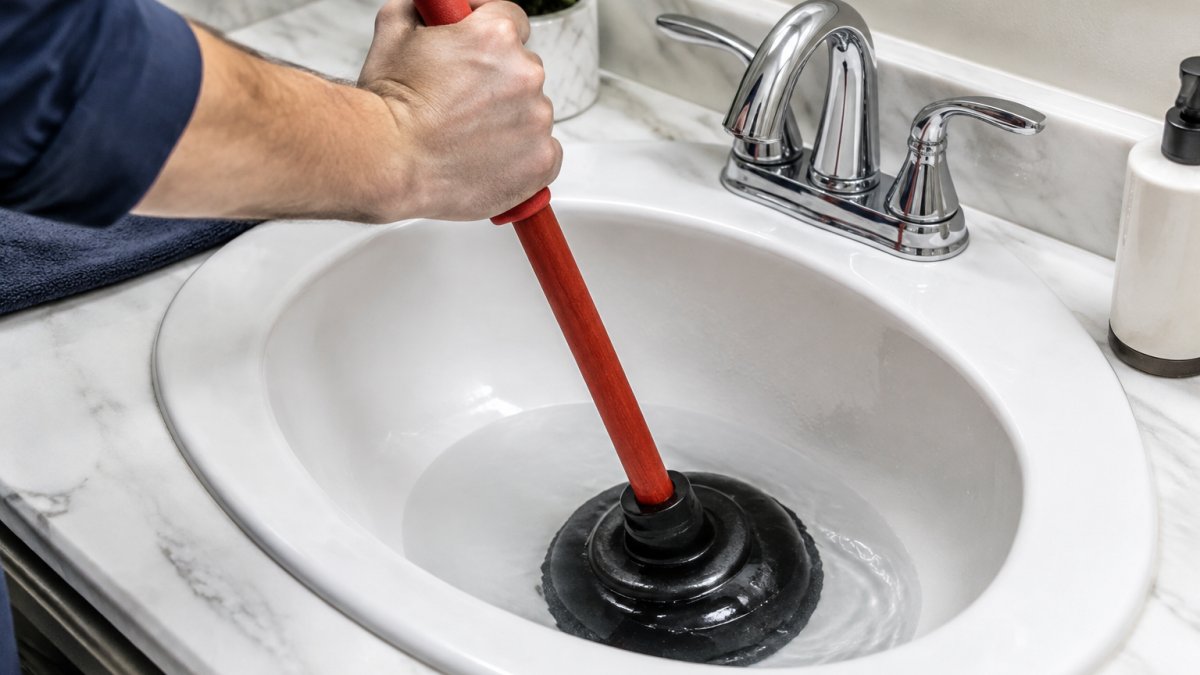
Clogged drain or slow sink | Flat rate | Low to moderate | Scope is usually clear; a flat rate caps your cost if the clog is stubborn |
Dripping faucet or worn cartridge | Flat rate | Moderate | Parts are cheap, but a wrong cartridge or cross-threaded fitting turns a small fix into a call-out |
Toilet rebuild (flapper, fill valve) | Flat rate | Low | Kits are standardized and instructions are clear |
Water heater replacement | Flat rate | High | Permits, venting, and gas or electrical connections carry code and safety risk |
Repiping or slab leak repair | Hourly or hybrid | Very high | Scope is unpredictable until walls or slab are opened; DIY is not realistic |
Sewer line camera inspection | Flat rate | Not applicable | Requires equipment most homeowners don't own |
Two rules of thumb make the matrix useful. First, if the job requires a permit, treat DIY as a liability decision rather than a cost decision, an unpermitted repair can complicate a future sale or insurance claim. Second, if the failure mode is water damage, the downside of a DIY mistake usually exceeds the savings.
Where hidden fees hide in each structure
Flat rate: The hidden fee is scope creep, a base price that excludes the parts you actually need. Ask for the flat rate to include labor and standard materials, and list exclusions in writing.
Hourly: The hidden fee is time inflation, vague estimates, multiple technicians billed to one job, or diagnostic time billed separately from repair time. Ask whether the diagnostic fee is credited toward the repair.
Hybrid (flat rate plus hourly for overages): The hidden fee is the trigger point. Ask exactly what causes the switch from flat to hourly and who approves it.
A quote that names the structure, the rate, the estimated hours or flat total, and the exclusions is a quote you can compare. One that names only a number is not.
Emergency Surcharges, Trip Charges, and After-Hours Rates Explained
Every legitimate plumbing company has some version of these fees. The difference between fair and unfair is disclosure, not existence.
Service call fee: A flat charge to send a technician out. Often credited toward the repair.
Trip charge: Covers travel, sometimes charged separately from the service call.
After-hours rate: A higher labor rate for nights, weekends, and holidays.
None of these are scams on their own. A scam is charging them without telling you first. When you call, ask directly: "What will this call cost me before any work begins?" A straight answer is a good sign.
The Real Cost of Delaying Repairs and How to Protect Your Warranty
A small leak rarely stays small. Delayed repairs can let water reach framing, drywall, and flooring, and the repair bill can grow the longer you wait.
Delaying also puts your warranty at risk.
Protect yourself by keeping every invoice, warranty document, and approval record. Know exactly what your plumbing guarantee and warranty covers before you need it. A written record is your use if a dispute arises.
Book Your Transparent Plumbing Estimate with True Value Plumbing
Hidden fees thrive on vague estimates and rushed decisions. You can shut that door by demanding written, itemized quotes and reading them closely. That's the whole game.
At True Value Plumbing, we aim to be transparent throughout the process. We offer residential and commercial plumbing services and a 10% discount for military personnel and senior citizens.
Ready to learn more? Book your transparent plumbing estimate online and get the details before you commit.
Frequently Asked Questions
What is a typical service fee for a plumber, and how do I know it is not inflated?
A service call fee covers the visit and diagnosis, separate from repair work. Pricing depends on the job, so ask for the diagnostic fee and repair pricing in writing. Ask whether the fee is waived if you approve the repair, request the hourly labor rate and parts markup in writing, and compare at least two written estimates. A transparent provider will explain the diagnostic fee upfront and itemize it on the invoice.
What questions should I ask before hiring a plumber to avoid hidden fees?
Ask for a written estimate with a line-by-line scope of work, the hourly labor rate or flat-rate price, the trip charge, and whether permits and disposal are included. Confirm the after-hours rate and emergency surcharge policy. Ask if the company is licensed, bonded, and insured, and request the labor warranty terms. Also ask how change orders are handled if the job turns out bigger than expected. Getting these answers before work starts prevents surprise charges later.
Are flat-rate or hourly plumbing rates better for avoiding hidden costs?
Flat-rate pricing gives you a fixed total before work begins, which protects you from open-ended hourly billing and is generally easier to compare across quotes. Hourly pricing can cost less for quick fixes but carries more risk if the job runs long. Either way, ask for the flat-rate price in writing and confirm what the rate excludes, such as parts markup or permit fees. A plumbing estimate template helps you compare both structures side by side.
How can I tell if my plumber is overcharging me?
Compare your itemized invoice against the written estimate and flag any line that was not approved. Check that parts are billed at a reasonable markup, that labor hours match the project timeline, and that no duplicate trip charges appear. If a price seems high, ask for the standard operating procedure behind it and request a breakdown. Getting two or three written estimates before hiring, and keeping a post-repair audit of the final bill, can help you spot overcharging.
The next time a quote sounds too good to be true, slow down and ask for it in writing. True Value Plumbing gives you a clear, itemized estimate before work starts, backed by a one-stop shop for residential and commercial needs and a genuine 10% discount for military and senior customers. Get started with True Value Plumbing and replace guesswork with a number you can trust.

Comments